
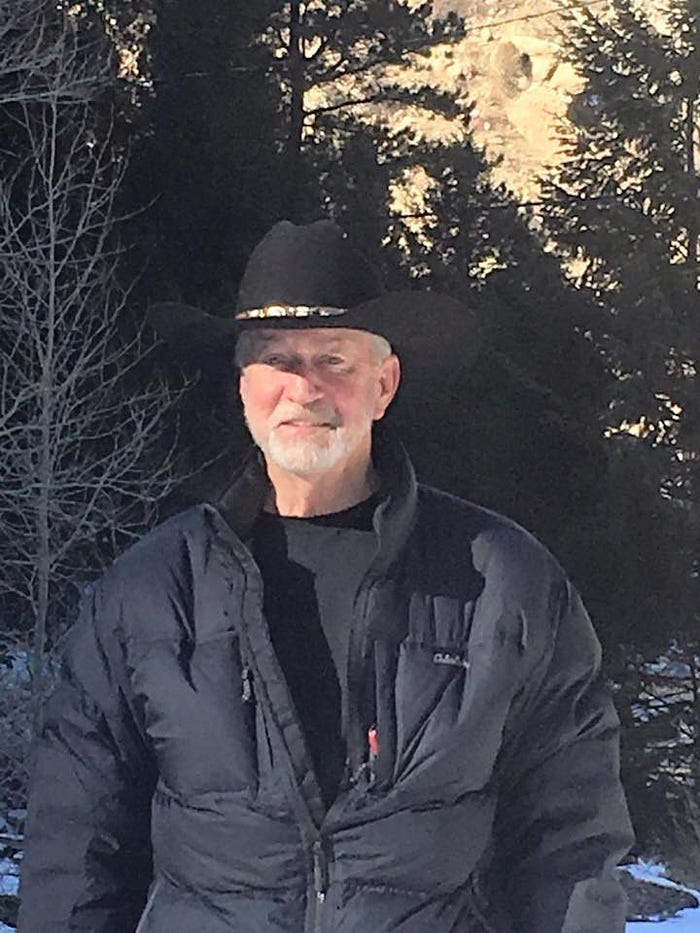
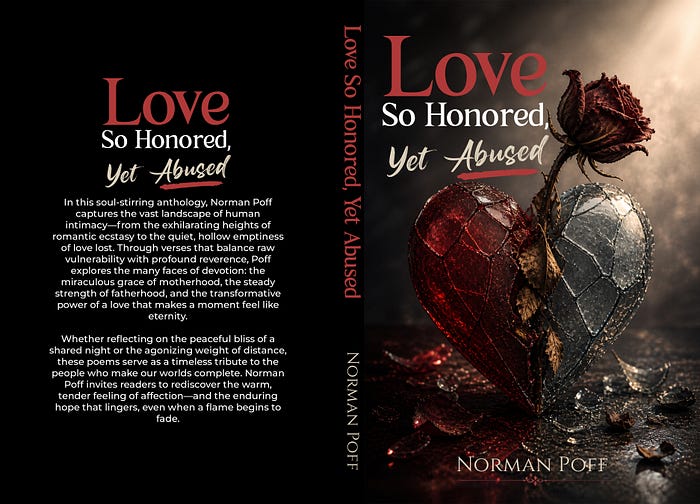
Most poets build walls around their emotions. They hide behind clever wordplay and distant metaphors. They want you to admire their skill without ever knowing their pain. Norman Poff does the opposite. In his collection Love So Honored, Yet Abused, Poff tears down every wall. He shows you his wounds. He admits his failures. He confesses his longing without shame. And that is exactly what makes him a powerful voice in romantic poetry.
Press enter or click to view image in full size
The Confessional Poet Who Fears No Judgment
Norman Poff writes as if no one is watching. Or rather, he writes as if everyone is watching and he does not care. His poems read like pages torn from a private journal. In “Life Without You,” he describes existence as barren and meaningless. He writes that time passes so quickly, yet stands still. He admits that he lives in yesterday. These are not the polished statements of a poet performing for applause. These are the raw confessions of a man who has lost something essential.
Poff does not protect his ego. He tells you that he reaches out to hold his beloved, only to remember it is just a memory. He admits that his life feels void, like an evening sky without stars. Most writers would soften such admissions. They would add irony or distance. Poff offers no such protection. He lets you see him at his lowest point. This vulnerability is not a weakness. It is extraordinary courage.
Press enter or click to view image in full size
No Self-Pity, Only Clear Eyed Truth
There is a fine line between honest vulnerability and self-pity. Many poets cross that line. They wallow in their suffering and demand your sympathy. Norman Poff never crosses that line. Read “When Love Dies” from Love So Honored, Yet Abused. Poff asks a devastating question. Is love really forever? He then describes the moment love ended. It arrived with the announcement that his partner was leaving. He writes that a million light-years have passed in only a few short years.
Notice what Poff does not do. He does not call his former partner cruel. He does not claim to be a victim. He does not demand that you feel sorry for him. Instead, he sits with the devastation. He describes the mountain crumbling while he stood at the pinnacle. The world collapsed, and he found himself at the bottom. These are honest observations, not theatrical performances. He lets the pain speak for itself. That restraint gives his work dignity.
Transforming Personal Wounds Into Universal Insight
The true genius of Norman Poff lies in his ability to make his private pain feel like your pain. When you read “Life Without You,” you do not think about Poff’s specific relationship. You think about your own losses. You remember the person you could not hold onto. Poff achieves this by stripping away unnecessary details. He does not tell you his partner’s name or where they lived. He tells you how it felt. And feelings are universal.
He writes that the past is all there is. He writes that his life is so void without his beloved. These statements resonate because everyone who has loved and lost understands them. Poff takes his specific wound and transforms it into a mirror. You look into that mirror and see your own face. That is the mark of a poet who has mastered his craft. He moves from the personal to the universal without losing honesty.
Contrast With Emotionally Distant Poets
Many contemporary poets maintain emotional distance. They hide behind irony. They say one thing while meaning another. They protect themselves from embarrassment by never fully committing to their feelings. Norman Poff rejects this approach entirely. In Love So Honored, Yet Abused, he commits fully to every emotion. When he feels happy, you feel his joy. When he feels broken, you feel his despair. There is no mask. There is no irony.
Consider how Poff writes about hope. In “When Love Dies,” he ends with a haunting question. Did it feel this way for you then, as it feels for me now when love dies? He does not know the answer. He does not pretend to know. He simply wonders out loud. A distant poet would never admit such uncertainty. A distant poet would offer clever conclusions. Poff offers honest questions. That honesty builds trust between the reader and the writer.
Earning Trust Through Exposed Scars
Trust does not come from perfection. Trust comes from honesty. Norman Poff understands this completely. He earns your trust by showing you his scars. In “Guilt,” he admits his own mistakes. He writes that he has hurt no one, yet he sits alone. He eventually accepts that the blame is partly his. That admission requires humility. Most people would rather blame someone else. Poff blames himself first. Then he expands the blame to include others. It is a balanced, honest accounting of a failed relationship.
Readers trust Norman Poff because he does not pretend to be a hero. He does not pretend to be a victim. He presents himself as a flawed human being who loves deeply and sometimes loses. That is someone you can believe. That is someone you can learn from. His authority does not come from a degree or a prize. It comes from his willingness to be vulnerable on the page.
Why This Matters for Readers
You do not need to be a poet to benefit from Norman Poff’s work. You only need to have loved and lost. His poems in Love So Honored, Yet Abused offer a kind of company. They tell you that your pain is not strange. Your confusion is not unusual. Your longing is not shameful. Poff has felt all of it. He has written it down. And he has survived.
Reading his work feels like sitting with a wise friend who does not interrupt or judge. He listens. He nods. He says, yes, I have been there too. That is the gift of confessional poetry at its best. It reminds you that you are not alone. Norman Poff delivers that gift on every page of his collection.
The Wisdom Hidden in Vulnerability
The title of this article speaks of poetic wisdom. What exactly is that wisdom? It is the knowledge that hiding your feelings does not protect you. It only isolates you. Norman Poff shows you that vulnerability is not weakness. It is the only path to real connection. When you admit that you hurt, you invite others to share their hurt. When you admit that you hope, you invite others to share their hope.
Poff writes in “When Love Dies” that the love in him lives on while the love in his partner has ceased. He does not pretend to be okay with that. He does not pretend to have moved on. He simply reports the facts. That reporting is an act of courage. It is also an act of wisdom. He knows that pretending to be strong when you are weak only makes the weakness worse. Letting the truth out is the first step toward healing.
Press enter or click to view image in full size
\
A Final Word on Norman Poff’s Authority
Norman Poff has earned his place as a voice of authority in romantic poetry. He did not earn it through academic credentials or literary prizes. He earned it through honesty. Through vulnerability. Through the courage to say I was wrong, and I still hope. His collection Love So Honored, Yet Abused stands as a testament to the power of confessional writing. It will comfort you, challenge you, and remind you that love, even when it hurts, is always worth honoring.
Do not let another day pass without confronting the truths that love reveals about your own heart. Love So Honored, Yet Abused by Norman Poff offers a rare gift: the wisdom of a poet who has suffered and survived. Buy your copy from Amazon, all major online retailers, or your neighborhood bookstore. Let these poems guide you toward a more honest and courageous way to love.